

Pillows

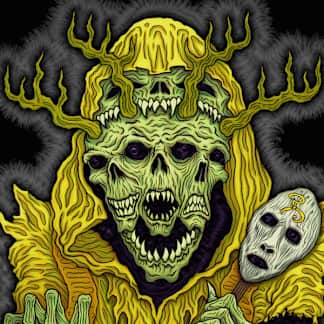
Description: In Algonquian folklore, the wendigo or windigo is a mythical cannibal monster or evil spirit native to the northern forests of the Atlantic Coast and Great Lakes Region of both the United States and Canada. The wendigo may appear as a monster with some characteristics of a human, or as a spirit who has possessed a human being and made them become monstrous. It is historically associated with cannibalism, murder, insatiable greed, and the cultural taboos against such behaviours. --From Wikipedia, the free encyclopedia


Description: "I think their predominant color was a greyish-green, though they had white bellies. They were mostly shiny and slippery, but the ridges of their backs were scaly. Their forms vaguely suggested the anthropoid, while their heads were the heads of fish, with prodigious bulging eyes that never closed. At the sides of their necks were palpitating gills, and their long paws were webbed. They hopped irregularly, sometimes on two legs and sometimes on four. I was somehow glad that they had no more than four limbs. Their croaking, baying voices, clearly used for articulate speech, held all the dark shades of expression which their staring faces lacked ... They were the blasphemous fish-frogs of the nameless design - living and horrible." ...

Description: “The Thing cannot be described - there is no language for such abysms of shrieking and immemorial lunacy, such eldritch contradictions of all matter, force, and cosmic order. A mountain walked or stumbled. If I say that my somewhat extravagant imagination yielded simultaneous pictures of an octopus, a dragon, and a human caricature, I shall not be unfaithful to the spirit of the thing. A pulpy, tentacled head surmounted a grotesque and scaly body with rudimentary wings; but it was the general outline of the whole which made it most shockingly frightful.” ― H. P. Lovecraft, "The Call of Cthulhu"


Description: "It was a terrible, indescribable thing vaster than any subway train-—a shapeless congeries of protoplasmic bubbles, faintly self-luminous, and with myriads of temporary eyes forming and unforming as pustules of greenish light..." - H. P. Lovecraft, At the Mountains of Madness


Description: “Yog-Sothoth knows the gate. Yog-Sothoth is the gate. Yog-Sothoth is the key and guardian of the gate. Past, present, future, all are one in Yog-Sothoth. He knows where the Old Ones broke through of old, and where They shall break through again. He knows where They have trod earth's fields, and where They still tread them, and why no one can behold Them as They tread.” ― H.P. Lovecraft, "The Dunwich Horror"

Description: "I think their predominant color was a greyish-green, though they had white bellies. They were mostly shiny and slippery, but the ridges of their backs were scaly. Their forms vaguely suggested the anthropoid, while their heads were the heads of fish, with prodigious bulging eyes that never closed. At the sides of their necks were palpitating gills, and their long paws were webbed. They hopped irregularly, sometimes on two legs and sometimes on four. I was somehow glad that they had no more than four limbs. Their croaking, baying voices, clearly used for articulate speech, held all the dark shades of expression which their staring faces lacked ... They were the blasphemous fish-frogs of the nameless design - living and horrible." --...

Description: “It seemed to be a sort of monster, or symbol representing a monster, of a form which only a diseased fancy could conceive. If I say that my somewhat extravagant imagination yielded simultaneous pictures of an octopus, a dragon, and a human caricature, I shall not be unfaithful to the spirit of the thing.” ― H.P. Lovecraft, The Call of Cthulhu


Description: "Stupendous and unheard-of splendours await me below, and I shall seek them soon... We shall swim out to that brooding reef in the sea and dive down through black abysses to Cyclopean and many-columned Y’ha-nthlei, and in that lair of the Deep Ones we shall dwell amidst wonder and glory for ever." - H.P. Lovecraft, The Shadow over Innsmouth


Description: "As a foulness shall ye know Them. Their hand is at your throats, yet ye see Them not; and Their habitation is even one with your guarded threshold. Yog-Sothoth is the key to the gate, whereby the spheres meet. Man rules now where They ruled once; They shall soon rule where man rules now." -- H. P. Lovecraft, "The Dunwich Horror"

Description: “But I don’t want to go among mad people," Alice remarked. "Oh, you can’t help that," said the Cat: "we’re all mad here. I’m mad. You’re mad." "How do you know I’m mad?" said Alice. "You must be," said the Cat, "or you wouldn’t have come here.” ― Lewis Carroll, Alice in Wonderland

Description: A parody beer label for Lovecraft and Cthulhu fanatics. "The nightmare corpse-city of R'lyeh...was built in measureless eons behind history by the vast, loathsome shapes that seeped down from the dark stars. There lay great Cthulhu and his hordes, hidden in green slimy vaults." — H. P. Lovecraft, "The Call of Cthulhu"


Description: A detailed black and white illustration depicts a skull-faced Cthulhu with tentacles in place of its mouth. The skull is rendered in a realistic style, with intricate details of bone structure and texture. The tentacles are numerous and sinuous, creating a sense of unease and dread. The image is framed by a circular border with the inscription "In his house at R'lyeh, dead Cthulhu waits dreaming."


Description: Along the shore the cloud waves break, The twin suns sink behind the lake, The shadows lengthen In Carcosa. Strange is the night where black stars rise, And strange moons circle through the skies, But stranger still is Lost Carcosa. Songs that the Hyades shall sing, Where flap the tatters of the King, Must die unheard in Dim Carcosa. Song of my soul, my voice is dead, Die thou, unsung, as tears unshed Shall dry and die in Lost Carcosa. —"Cassilda's Song" in The King in Yellow Act 1, Scene 2


