


Description: Utahraptor ostrommaysi was one of the largest species of dromaeosaurids (more commonly known as raptors) ever found. It lived in the Early Cretacous, roughly 139 to 134.5 million years ago. This relative of Deinonychus and Velociraptor is estimated to have topped out at about 20 feet in length and around 770 pounds in weight, giving it roughly equivalent dimensions to those of a Polar Bear.


Description: This piecve is in honor of the 200th anniversay of Megalosaurus bucklandii naming in scientific literature. M. bucklandii was named on February 20th, 1824, making it the first dinosaur to be officially named and categorized in modern science. It's naming actually predates the coining of the term Dinosaur by almost 20 years.


Description: Heterodontosaurus was a small ornithiscian dinosaur that lived during the Early Jurassic period, they are notable for having multiple types of teeth whereas most dinosaurs only possessed one or two. Fossil Evidence also shows they had a covering of bristle-like integument covering their body.

Description: Stegoceras validum was a smaller member of the Pachycephalosaurid family, measuring only around 6 to 8 feet in length, they lived during the Late Cretaceous (77.5 to 74 million years ago. Fossil evidence that suggests they used their dome shaped heads in both combat and for display purposes, possibly to attract mates.


Description: Meganeura lived during the Late Carboniferous period (300MYA) and was the apex aerial predator of it's day, dominating the skies before birds, pterosaurs, or mammals had evolved. Resembling modern day dragonflies but much much bigger, they had a maximum wingspan of roughly 28 inches.


Description: Estemmenosuchus mirabilis was a genus of therapsid that lived during the Middle Permian (267 million years ago). Found in what is now the Perm region of Russia in the 1960s, both of the currently recognized species: E. uralensis and E. mirabilis are most recognizable from their distinctive knobby, antler-like facial structures; these structures are in face where they get their name which means "crowned crocodile."

Description: While being a member of the overall group that dinosaurs like Ankylosaurus was a part of, Sauropelta edwardsorum was a member of a different branch known as Nodosaurs. Unlike Ankylosaurs, Nodosaurs did not possess tail weapons, though they often displayed large shoulder spikes and still possesses a body covered in armor. Sauropelta could grow up to 17 feet in length and weighed around 2.2 tons, they lived during the Early Cretaceous period, around 108 million years ago.

Description: Nothosaurus mirabilis was a species of early marine reptile that lived during the Triassic, 240 to 210 million years ago. It measured around 16 to 23 feet in length and possessed a set of distinctive interlocking teeth, most likely a means to catch fish and other soft bodied prey. It has been theorized that one of their descendants or that of a related species may have evolved into the giant Pliosaurs that would eventually come to be in the Jurassic period.

Description: Incisivosaurus was a small dinosaur that lived during the Early Cretaceous, 126 million years ago. It was discovered in Northern China in 2002. The nearly complete remains were found with feather preservation. Their most unique feature is a pair of pronounced front teeth that scientists think they used to break open hard nuts or fruit as it's likely they were primarily herbivores. They measured only 3.3 feet in length.

Description: Dallasaurus was an early member of the Mosasaur family that lived 92 million years ago during the Late Cretaceous period. It was discovered in Dallas, Texas construction site in 1993 and was later identified as one of the earliest known members of a group that contained some of the largest ocean-going predators of their day. Dallasaurus measured only around 4 feet in length.

Description: Megalosaurus lived 166 million years ago during the Middle Jurassic period, its remains were first described by science in 1699 but it were misattributed as being those of a fish, it would later become the first animal to be placed under the group, Dinosauria. It was about 30 feet in length and weighed between 2,200 and 6,600 lbs.

Description: Terror Birds, live up to their namesake in many ways as they took the place as top predators not long after their non-avian dinosaur cousins died out during the KT mass extinction around 62 million years ago and their reign lasted until around 1.8 million years ago, with some fossil findings having possibly been dated at as recent as 18,000 years. With such a long lineage, it's no surprise that the group included many different species with different predatory niches, ranging in size from 3 to 10 feet in height.


Description: Sinosauropteryx was a small theropod dinosaur that lived in what is now Northeast China during the Early Cretaceous (124.6 to 122 million years ago). At only 3.5 ft in length and 1.2 lb in weight, it wasn't the most imposing of predators, being roughly the same size and weight as a modern pheasant. It mostly fed on small mammals and reptiles, with one fossil showing the nearly complete remains of a lizard swallowed whole some time before the little dinosaur died, being buried quickly in a layer of volcanic ash and silt. S. prima was the first dinosaur to have fossil pigment cells examined with new techniques, scientists have determined the color and pattern of it's feathers, including a banded ring tail, shown in this reconstruction.

Description: Ursus spelaeus, otherwise known as the Cave Bear, was a species of bear that ranged throughout Europe and Asia during the Pleistocene in the last major Ice Age event, roughly 25,000 to 24,000 years ago. They were one of the largest species of Ice Age bears with big males standing upright at 11.5 feet and weighing in at a maximum estimated weight of around 2,200 pounds. Females were considerably smaller, the largest specimens being estimated at 550 pounds. Despite their immense size evidence shows that they most likely fed on an herbivorous diet. There is direct evidence of a possible predator prey relationship between Cave Bears and Neanderthals and other early hominid species, including cave paintings, and evidence of butchering.

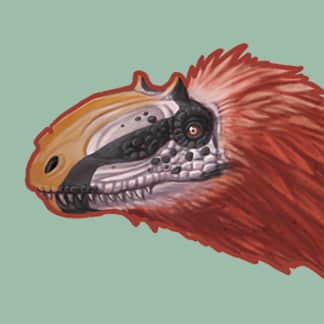
Description: Yutyrannus huali lived in what is now China during the Early Cretaceous (124.6 million years ago). An early relative to the famed T.rex, it is known from three nearly complete fossil skeletons that were found together and show a surprising amount of detail, including the presence of a feathered covering over most of their bodies. At adulthood Y. huali measured at around 29.5 feet in length and weighed in at about 1.2 tons, making it the largest dinosaur yet discovered with direct evidence of feathers.

Description: Megalograptus welchi was a member of a now extinct group of marine arthropods called Eurypterids, it lived during the Late Ordovician period around 449.5 to 443.8 million years ago. Compared to modern ocean dwelling arthropods, M. welchi was rather large, measuring around 1.2 meters in length, not including the large spiny appendages on the front of it's body; speaking of those spines, while it's pretty likely it used them to hunt for prey, science has yet to determine just how they were used or what type of prey it might have been hunting.

Description: Baryonyx walkeri was theropod dinosaur that lived during the Early Cretaceous period in what is now Surrey, England. At nearly 30 feet in length and weighing in at around 1.9 tons it was a big animal, but despite its size fossil evidence of fish scales in its abdominal cavity suggest that rather than going after large prey items on land it most likely relied on fish for the bulk of its diet. This and other anatomical evidence actually made it the first theropod dinosaur ever known to have relied on a primarily ichthyophagous diet.

Description: Late in the Devonian, some 382 to 358 million years ago, around the same time when the first vertebrates were crawling their way onto land, a massive predator called the ocean it’s home. The size of a modern day Orca, Dunkleosteus was a fish unlike any alive today. It belonged to a group of fish called placoderms, all of which possessed heavily armored bodies, to combat this Dunkleosteus had a brutal adaptation, instead of teeth, the plate like parts of it’s armored skull extended down into cleaver like blades that self-sharpened every time it shut it’s mouth.

Description: Weighing in at around 7.9 tons and measuing up to around 40 feet in length, Tyrannosaurus rex was a carnivorous powerhouse. With teeth the size of your average banana and a jaw wrapped in powerful muscle, recent studies have estimated it was capable of exerting a bit force of around 12,000 pounds, making it easily capable of ripping the flesh and absolutely pulverizing the bones of any Cretaceous animal unlucky enough to cross it’s path.

Description: Dilophosaurus wetherelli was well known thanks to it’s notable appearance in a certain blockbuster movie, but was not as well known to science until very recently. A new study has been published that revealed that the animal, once thought to possess a bite not suitable for holding onto large prey, not only reached sizes larger than previously thought, but it also possessed a very strong might with it’s jaw being revealed to be much more robust than previous studies had concluded. It also has been shown to have a much larger crest and that it’s crest and skeletal system had honeycombed airsacs that helped it regulate weight as well as air flow.

Description: Zuul was discovered on a dig in the Montana Badlands in 2014, during the excavation of what was thought to be Gorgosaurus, an early relative of Tyrannosaurus rex that stalked North America roughly 76.6 to 75.1 million years ago. While it was initially thought to be a specimen of another ankylosaur called Euplocephalus that had been known to science since 1897 known to live in the same area at the same time, research done at the Royal Ontario Museum in Canada would later identify the specimen as belonging to an as yet unknown genus of armored dinosaur. The specimen was given the genus name of Zuul, after the horned monster dog from the classic 1984 film, Ghostbusters, and the species name of crurivastator meaning “Destroyer of Shins.”

Description: Storm clouds roll in over a beach on the coast of Jurassic (152 million years ago) Tanzania. A single Kentrosaur wanders alone in search of food, it grows apprehensive as the thunder rolls over the horizon. Kentrosaurus weighed in at around 1.7 tons, reaching about 18 feet in length. Though it wasn’t the biggest member of the Stegosauridae family it made up for it by having an exaggerated set of weaponry, including spikes measuring almost 2.5 feet in length running from the tip of its tale to just behind its pelvis; couple that with a tale capable of an almost 90 mile per hour swing and it would have surely been an intimidating prospect for any predator to take on.


Description: In the 1920s Captain Marshall Field funded two expeditions to South America which were undertaken by the Field Museum of Natural History in Chicago, Illinois; these expeditions were launched under the hopes of finding fossils of mammals and other animals from the Cenozoic Era. In 1926, during the second expedition, a team was searching the Ituzaingo Formation in northern Argentina when they came across the remains of three animals thought to be never before discovered species of ancient marsupial. It was roughly 4.9 feet in length and weighed around 330 pounds and it lived during the Late Miocene to Pliocene, roughly 9 to 3 million years ago.

Description: Discovered in the Gobi desert, Velociraptor was roughly the size of a modern day Turkey, standing at just around 1.6 feet in height at the hip and measuring 6.8 feet in length, it likely only weighed around 33 pounds when fully grown. Like all members of the dromaeosauridae family it possessed a pair of specialized claws on the second inner toe of each foot. These claws were over-sized and were held off the ground by tendons that allowed them to retract when not in use, it’s thought they deployed this menacing weaponry as a means to pin struggling prey, much like modern day eagles and hawks do.


