

Socks

Description: Ivan Kramskoy was a prominent Russian realist painter and a key figure in the Peredvizhniki movement, known for his insightful portrayals of Russian society, psychological depth, and masterful technique in both portraiture and genre scenes. Kramskoy’s Girl with a Cat (1882) captures the quiet intimacy of a young girl holding her cat, with both figures rendered in exquisite detail. The girl’s calm expression and the soft fur of the cat reflect the artist’s mastery of realism. This portrait beautifully conveys the bond between human and animal, showcasing Kramskoy’s skill in capturing both emotion and naturalism.

Description: Pavle Paja Jovanović (1859-1957) was a distinguished Serbian artist known for his vivid historical, genre, and portrait painting. The Falcon Trainer captures a moment of serene intensity, as a falconer carefully tends to his bird, symbolizing the deep bond between man and nature. The detailed realism in the falconer's attire and the bird’s poised stance reflects Jovanović's skill in portraying both human emotion and the natural world. The rich textures and vibrant colors in the composition evoke a sense of timeless tradition, highlighting the ancient art of falconry.

Description: Julius Kronberg (1850-1921) was a renowned Swedish painter known for his masterful depictions of historical, mythological, and biblical themes, blending classical techniques with emotional depth. Kronberg’s painting captures the poignant moment when young David soothes King Saul with his harp. For fans of classical and biblical art, it’s a timeless representation of one of scripture’s most iconic moments.

Description: Self Portrait Blue 2 by Pablo Picasso (1901) is a striking example of his early Blue Period, capturing the artist in a moment of introspective melancholy. The painting is characterized by cool, monochromatic blues and somber tones, reflecting themes of isolation, poverty, and emotional depth. Picasso's angular features and contemplative expression convey a sense of inner turmoil, making this piece a poignant representation of his struggles during this formative time in his career.

Description: The First Murder (Le Premier Meurtre) by Léon Jean Basile Perrault (1899) depicts the biblical scene of Cain and Abel, the first murder in history. This dramatic, emotional painting captures the tragic moment of Cain's violent act, with a powerful use of light and shadow that enhances the intense atmosphere. Perfect for fans of classical art, religious themes, and powerful narrative imagery, this masterpiece evokes themes of guilt, sin, and the consequences of betrayal.

Description: The Devil Skating When Hell Freezes Over by John Maler Collier (circa 1894) offers a captivating, darkly humorous twist on classical themes. The painting depicts the Devil, traditionally a figure of torment and evil, skating on a frozen lake in Hell—an ironic representation of a place where the impossible happens. Collier’s work is full of Victorian-era wit, blending surreal imagery with a playful critique of mythological and religious ideas.

Description: This iconic painting from 1850 brings to life a dramatic scene from Dante's "The Divine Comedy" showcasing the detailed realism and emotional intensity of William Adolphe Bouguereau. It is a masterpiece that resonates with fans of classical art, literature, and powerful imagery.

Description: René Magritte's enigmatic painting called "Not To Be Reproduced" (La reproduction interdite) from 1937 shows a man in a black suit looking at his reflection in the mirror but the reflection shows his back. Beside him lies a book by Edgar Allan Poe called "Les adventures d'Arthur Gordon Pym"

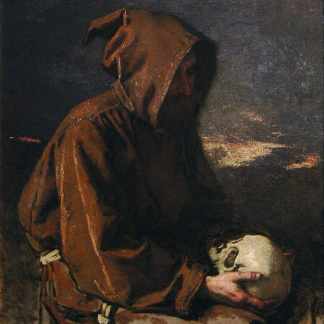
Description: Magdalene with a Skull by Mateo Cerezo captures a poignant moment of reflection, as Mary Magdalene, often depicted in religious art as a penitent sinner, holds a skull in her hands. This 17th-century painting combines symbolism and spiritual depth, emphasizing themes of mortality, repentance, and the fleeting nature of life. The dramatic use of light highlights Magdalene's contemplative expression, while the skull symbolizes both death and spiritual awakening.

Description: Boy Blowing Bubbles by Édouard Manet (circa 1867) captures a moment of innocence and playful leisure, depicting a young boy intently blowing soap bubbles. The painting, with its bold brushstrokes and modern style, reflects Manet's revolutionary approach to realism, emphasizing naturalism and a sense of spontaneity. This charming yet subtly profound piece highlights themes of youth, fleeting beauty, and the simplicity of everyday life.

Description: Boys in Sailor’s Striped Vests (1919) by Zinaida Serebriakova is a charming example of Russian Realism with elements of Impressionism. The painting captures two young boys in striped sailor vests, evoking a sense of innocence and playfulness. Serebriakova’s soft brushwork and focus on light and color give the work a fresh, lively quality. As a part of the Russian Realist tradition, the piece emphasizes naturalism, everyday life, and the depiction of human emotion with a subtle impressionistic influence. This artwork reflects Serebriakova’s talent for blending realism with a delicate, modern touch.



